
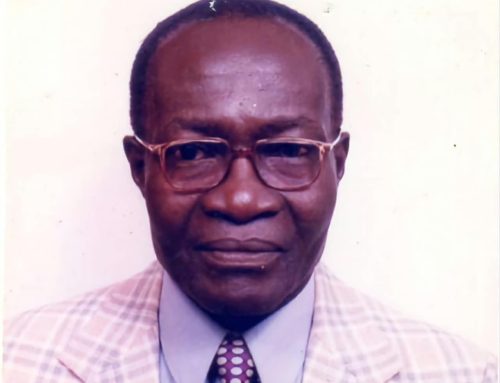
 Professor Christian Agyare, Thematic Speaker, PSGH AGM 2026
Ghana must urgently reduce its dependence on imported medicines and build a pharmaceutical industry that can produce most of the medicines the country consumes, the Vice-Chancellor of the Kwame Nkrumah University of Science and Technology (KNUST), Professor Christian Agyare, said.
Delivering the thematic address at the 90th Anniversary Annual General Meeting and Scientific Conference of the Pharmaceutical Society of Ghana (PSGH) at the University of Ghana’s Great Hall, Prof. Agyare backed calls for Ghana to raise local pharmaceutical production from below 30% of national consumption to at least 70%. He warned that overdependence on imported medicines leaves Ghana vulnerable to global supply disruptions, currency shocks and public health emergencies, describing pharmaceutical self-reliance as not only a health-sector priority but increasingly a matter of national security.
“A Ghana that manufactures most of its medicines is not simply a Ghana with a stronger pharmaceutical industry,” he said. “It is a Ghana better prepared for the next public health emergency.”
According to the KNUST Vice-Chancellor, achieving that ambition will require sustained investment in active pharmaceutical ingredient production, modern manufacturing infrastructure, stronger absorption of industrial pharmacists into local industry, and closer collaboration between universities and pharmaceutical companies to move research more quickly from laboratories into production.
From 26 pharmacists to a national professional force
Prof. Agyare used the anniversary platform to trace the remarkable evolution of pharmacy in Ghana, from the early training of dispensers in the late 19th century to today’s Doctor of Pharmacy education, specialist training and sophisticated pharmaceutical practice. He recalled that PSGH grew from just 26 founding members in 1935 into a professional body with thousands of pharmacists working across community practice, hospitals, academia, industry, regulation and public health.
He described the AGM theme “Science. Impact. Legacy. Ninety Years of Pharmaceutical Excellence” as more than a commemorative slogan. “Science is our foundation; impact is our responsibility; and legacy is our obligation to those who will come after us,” he said.
The speech highlighted major milestones in the professionalisation of pharmacy, including the progression from certificate and diploma training to Bachelor of Pharmacy and eventually the six-year Doctor of Pharmacy programme, as well as the establishment of the Ghana College of Pharmacists under Act 833 in 2011 to support postgraduate specialist training.
“Science that stays in the laboratory changes nothing”
A central message of the address was that pharmaceutical science must translate into practical benefits for patients. Prof. Agyare noted that pharmacists now contribute across virtually every level of Ghana’s health system, from neighbourhood pharmacies and hospital wards to manufacturing plants, regulatory agencies, universities and policymaking spaces. “Science that stays in the laboratory changes nothing,” he told participants, arguing that the real value of the profession lies in translating scientific expertise into safe medicines, patient counselling, public health interventions and reliable access to treatment.
He also praised the diversity of pharmacy practice, stressing that community, hospital, industrial, academic, research and regulatory pharmacists all contribute differently to a common goal: safer and more effective healthcare.
Pharmacists urged to embrace a bigger primary-care role
Looking ahead, Prof. Agyare challenged pharmacists to take on a broader role in Ghana’s health system. He called for stronger pharmaceutical and public health research, broader medicine coverage under the National Health Insurance Scheme, greater integration of pharmaceutical care into universal health coverage and wider adoption of e-prescribing and telepharmacy. He argued that digital pharmacy services could help bridge geographic inequalities in access to pharmaceutical care, allowing patients in remote communities to benefit from professional advice and strengthening real-time medicine-safety surveillance.
The Vice-Chancellor also urged pharmacists to intensify efforts against antimicrobial resistance, promote responsible prescribing and dispensing, strengthen public education on antibiotic misuse and contribute more actively to surveillance in collaboration with the Ministry of Health, FDA and other stakeholders. With shortages of physicians in many parts of the country, he said pharmacists should increasingly be recognised and utilised as accessible frontline primary-care professionals, particularly in underserved communities.
A message to the next generation
One of the most reflective moments of the speech came when Prof. Agyare addressed young pharmacists directly. He reminded them that they were inheriting an institution built by a small group of practitioners in 1935 with far fewer resources than are available today. Their responsibility, he said, was not simply to inherit PSGH but to add something meaningful to it before passing it on. He identified unfinished business for the new generation: increasing local medicine production, expanding access to pharmacy services in rural and underserved areas and answering important research questions that remain unresolved.
The message captured the central thrust of his address: ninety years should not merely be celebrated as history, but used as a platform for the next phase of pharmaceutical development in Ghana.
READ THE FULL SPEECH HERE:






Leave A Comment