
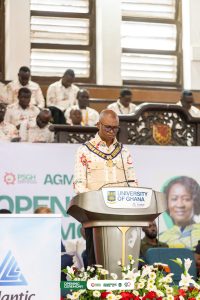
President of the Pharmaceutical Society of Ghana (PSGH), Dr Paul Owusu Donkor
President of the Pharmaceutical Society of Ghana (PSGH), Dr Paul Owusu Donkor, has challenged Ghana to translate its pharmaceutical ambitions into decisive action, warning that medicine security, environmental protection and stronger border controls are all essential to safeguarding the health and future of the country. Speaking at the opening ceremony of the PSGH 90th Anniversary Annual General Meeting and Scientific Conference, Dr Donkor said the milestone must go beyond celebrating the profession’s past and instead become a defining moment for shaping Ghana’s next decade of healthcare and pharmaceutical development.
“Our theme, Science. Impact. Legacy. captures both our pride and our responsibility,” he said, stressing that science must lead to better lives while legacy must be measured by the institutions and systems left for future generations.
Make medicines security a national priority
A major focus of the address was Ghana’s dependence on imported medicines.
Dr Donkor welcomed the Government’s five-year strategy to substantially expand local pharmaceutical production and urged authorities to turn the policy into a properly funded delivery programme backed by predictable procurement, timely payments, affordable long-term financing, technology transfer and strong regulatory systems. The PSGH President argued that medicine security must be treated as part of national security, noting that the COVID-19 pandemic exposed the vulnerability of countries heavily dependent on external suppliers.
He further positioned pharmaceutical manufacturing as an opportunity for job creation, research, industrial development and the Government’s broader 24-Hour Economy agenda.
“Factories making safe medicines need clean water”
Dr Donkor also drew a direct link between Ghana’s pharmaceutical industrialisation ambitions and the destruction of water bodies through illegal mining. He called for sustained enforcement against activities destroying rivers, forests and farmlands, warning that a country seeking to expand medicine manufacturing cannot afford to compromise the clean water required by communities, health facilities and pharmaceutical industries.
“Factories making safe medicines need dependable clean water,” he told the gathering, adding that Ghana’s industrial ambitions and protection of its rivers must advance together.
Drug trafficking threatens health, security and trade
The PSGH President also raised concern about drug trafficking and its implications for Ghana’s public health, national security and international reputation. He urged stronger intelligence-led controls at seaports, airports and land borders, improved cargo traceability and decisive action against individuals who organise, finance or facilitate illicit drug trafficking.
According to him, the issue extends beyond border security because well-resourced criminal networks can undermine legitimate trade, corrupt institutions and expose communities—particularly young people to serious harm.
A centenary worth working towards
Turning to pharmacists themselves, Dr Donkor said the profession must demonstrate internally the standards it demands of government and society. He urged pharmacists to manufacture with integrity, dispense responsibly, document the value of their care and speak up whenever patient safety is threatened.
Looking ahead to PSGH’s centenary in 2036, he envisioned a Ghana where more locally manufactured medicines reliably reach patients, young scientists build careers at home, rivers are cleaner and young people receive support before substance use destroys their prospects.
“Let this anniversary be remembered, not just for what we celebrated, but for the decisions it helped Ghana make, and the lives those decisions helped protect,” he declared.






Leave A Comment